Contents
- How to Greet People in Japan Properly
- The Custom of Taking Off Shoes in Japan
- How to Stay Hygienic and Respectful in Public Places
- Eating Customs and Proper Table Etiquette
- Eating Habits and Manners
- Restaurant Payment Etiquette
- Good Manners on Public Transportation
- How to Behave When Visiting Temples and Shrines
- How the Shrine Cleansing Process Works
- How to Pray at a Shrine or Temple
- How to Use Onsen and Public Baths Properly
- Using Smartphones and Social Media Respectfully
- How to Respect Personal Space and Privacy in Japan
- How to Behave in Hotels and Traditional Inns
- How to Shop and Pay in Stores: A Complete Guide
- Business Etiquette for Visitors
- Useful Japanese Words for Travelers
- How to Enjoy Japan Respectfully: Final Tips
Japan is famous for its rich culture, modern technology, and strong traditions. Visitors often notice how clean the streets are, how polite people are, and how organized daily life feels. However, behind this beauty is a clear set of social rules and manners that guide how people interact with each other.
Understanding these customs is important when traveling in Japan, as it helps you show respect and avoid unintentionally offending anyone.
This guide will introduce you to the most important aspects of Japanese etiquette, making your journey more enjoyable and helping you leave a positive impression on the people you meet.
How to Greet People in Japan Properly
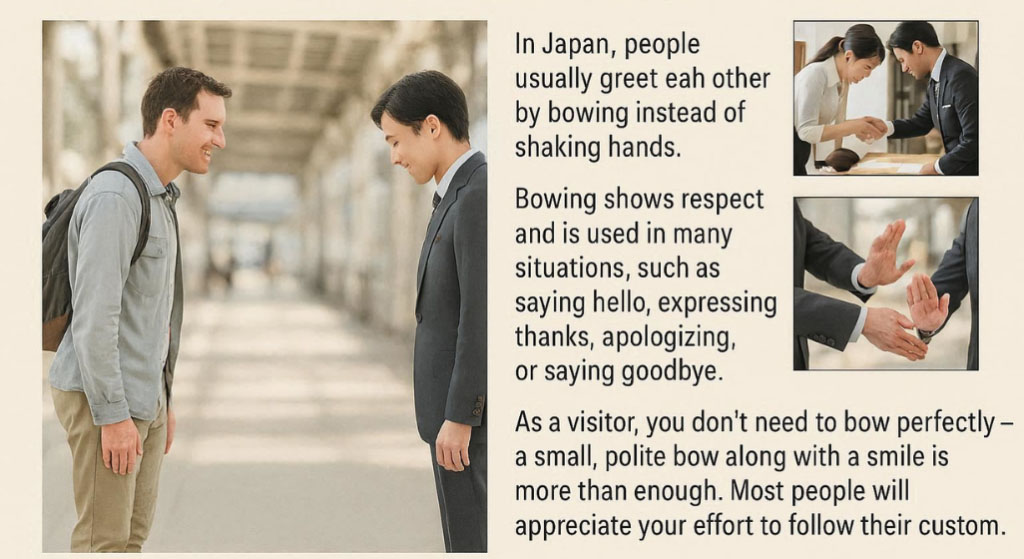
In Japan, people usually greet each other by bowing instead of shaking hands. Bowing shows respect and is used in many situations, such as saying hello, expressing thanks, apologizing, or saying goodbye.
As a visitor, you don’t need to bow perfectly — a small, polite bow along with a smile is more than enough. Most people will appreciate your effort to follow their custom. Handshakes are not very common, though some Japanese people may use them when meeting foreigners. Hugging is generally uncommon unless you are very close to someone.
It’s also thoughtful to use a few basic Japanese greetings when meeting people. A short list of helpful phrases is included later in this guide.
The Custom of Taking Off Shoes in Japan
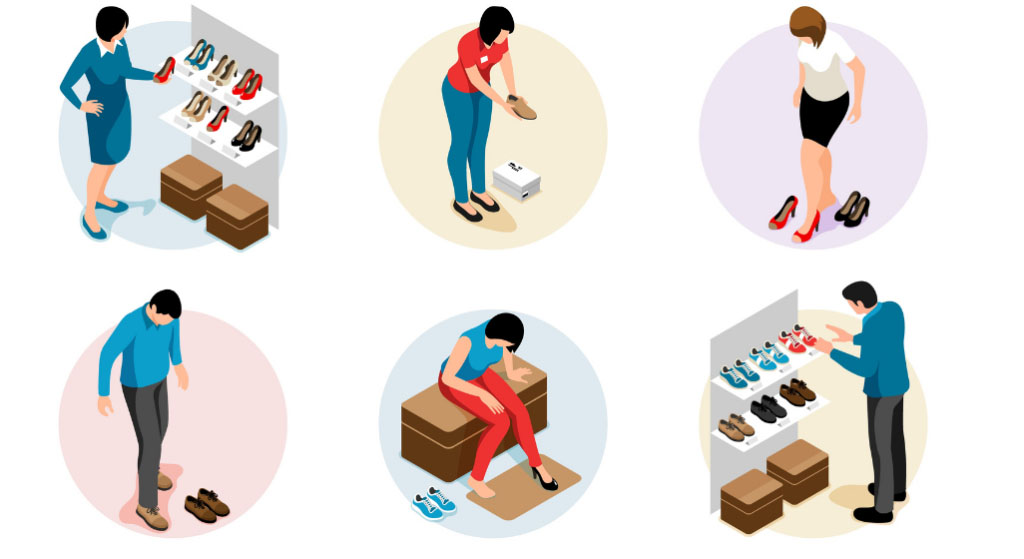
Removing your shoes before entering indoor spaces is an important tradition in Japan. It helps keep buildings clean and shows respect for the people inside. You will be asked to take off your shoes in many places, including:
-
Private homes
-
Traditional Japanese inns (called ryokan)
-
Some restaurants, especially those with tatami floors
-
Temples and shrines
-
Certain schools and medical clinics
At the entrance, you will usually find a small raised area or a shoe rack where you should leave your footwear. In many places, indoor slippers are provided for guests to wear instead. These slippers are meant only for indoor use and should never be worn outside.
When entering rooms with tatami mats, you must remove both your shoes and slippers. Tatami mats are delicate and meant to stay clean, so walking on them with footwear is considered disrespectful.
How to Stay Hygienic and Respectful in Public Places

Cleanliness plays an important role in daily life in Japan. People take great pride in keeping streets, public spaces, and buildings neat and well-maintained. It’s rare to see litter, and most areas look extremely clean. As a visitor, you’re expected to respect this culture by helping keep the environment pleasant for everyone.
Here are some simple ways to stay clean and show respect:
- Never throw trash on the ground. If there isn’t a bin nearby, carry your waste with you until you find one.
- Separate your garbage correctly. In Japan, waste is sorted into categories such as burnable items, non-burnable items, paper, plastic bottles (PET), cans, and glass. When unsure, follow posted instructions or observe locals.
- Avoid eating or drinking in places where it’s not permitted. Eating while walking is uncommon — people usually stop, eat neatly, and clean up afterward.
- Cover your mouth and nose when coughing or sneezing. Using a tissue or your elbow is considered polite, and many people wear masks when feeling sick.
- Wash your hands regularly and use sanitizer, especially before meals and after using public transport.
Eating Customs and Proper Table Etiquette
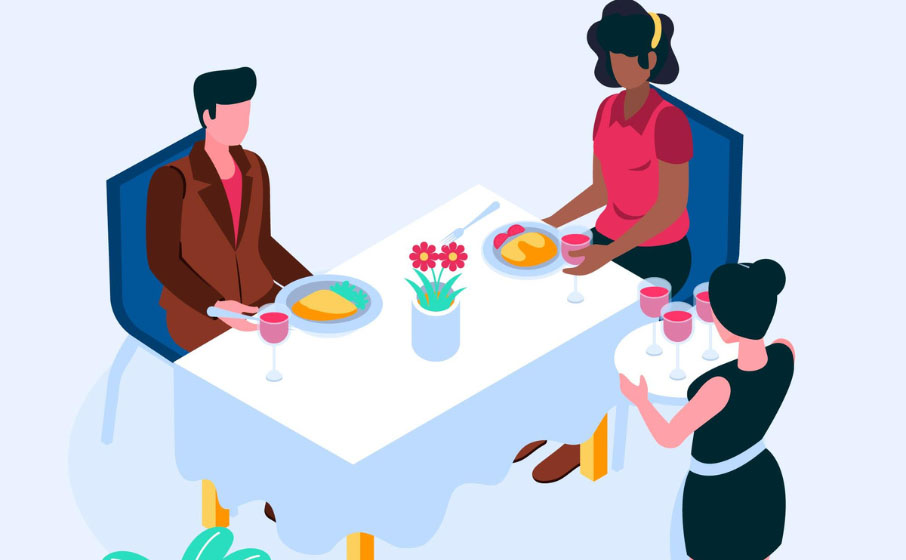
Eating Habits and Manners
- Say “Itadakimasu” before you start eating to express gratitude for the meal.
- Say “Gochisousama deshita” after finishing to thank the cook or host.
- Slurping noodles is acceptable and even shows you’re enjoying the food.
- Do not talk while chewing your food.
- Eat calmly and quietly — making too much noise is considered impolite.
- Try not to eat while walking; it’s better to stop and eat in one place.
Restaurant Payment Etiquette
- In most restaurants, you pay your bill at the front counter instead of at the table.
- When giving or receiving money, use both hands as a sign of respect.
- Place your cash or card in the small tray provided at the counter rather than handing it directly.
- Tipping is not customary in Japan — good service is already included in the bill.
Good Manners on Public Transportation

Public transportation in Japan is well-maintained, peaceful, and used daily by millions of people. To be respectful and avoid disturbing others, it’s important to follow a few simple manners:
- Avoid talking on your phone, as it’s considered impolite. Keep your phone on silent mode instead.
- If you must speak, keep your voice low and conversations short.
- Line up neatly at bus stops and train platforms, and always allow passengers to exit before boarding.
- On crowded trains, remove your backpack and hold it in front of you to make more space for others.
- Do not block seats with bags or stretch out your legs — keep your belongings close to you.
- Sitting on the floor is seen as very disrespectful and should be avoided.
- Priority seats are meant for seniors, people with disabilities, pregnant women, and adults with small children. Offer your seat when needed.
- Eating and drinking are not allowed on most local buses and trains, though it’s acceptable on long-distance trains like the Shinkansen.
How to Behave When Visiting Temples and Shrines
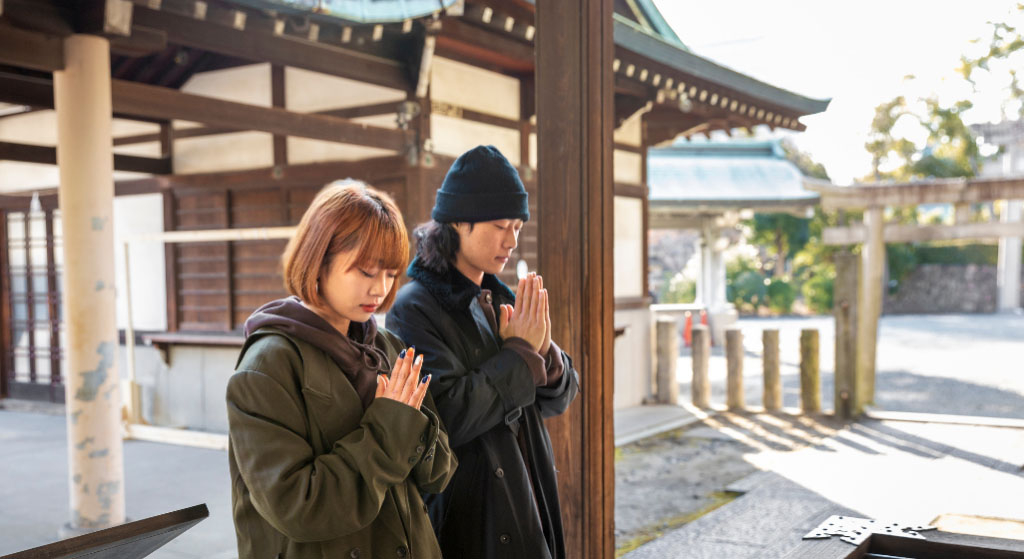
Temples and shrines in Japan are peaceful, sacred spaces meant for prayer and quiet reflection. When you visit, it’s important to follow a few simple etiquette rules:
How the Shrine Cleansing Process Works
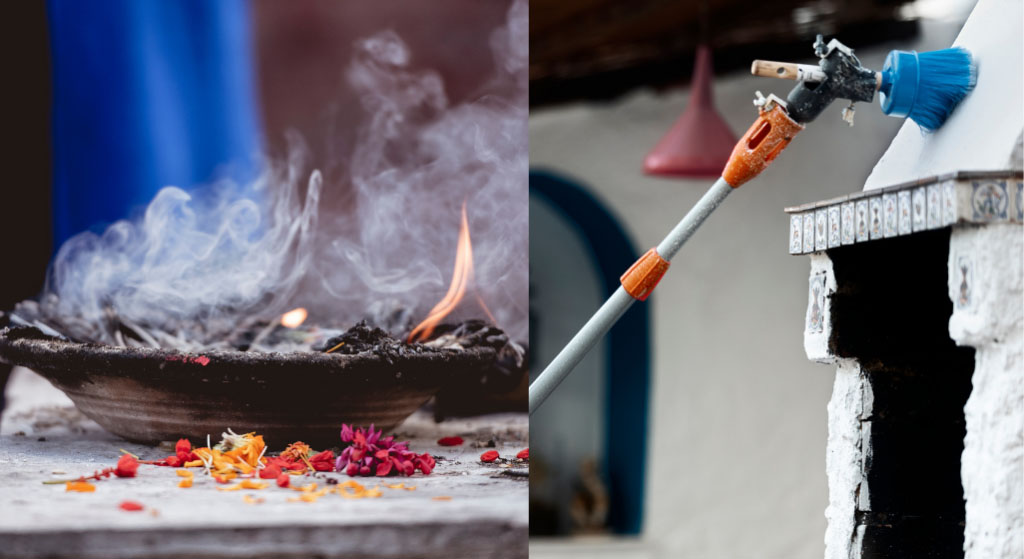
Before entering a Shinto shrine, visitors cleanse themselves at a small water fountain as a sign of respect. Follow these simple steps:
- Hold the ladle in your right hand first.
- Pour water over your left hand to wash it.
- Switch the ladle to your left hand and rinse your right hand.
- Pour a little water into your left palm and gently rinse your mouth — do not place the ladle directly on your lips.
- Spit the water into the drain beside the basin, not back into the water bowl.
- Rinse your left hand once more.
- Finally, let any remaining water flow down the ladle handle to clean it, then return it to its place.
How to Pray at a Shrine or Temple
At a shrine, visitors make a small offering before saying a prayer. The usual process is simple and meaningful:
- Gently place a small coin (often 5 yen) into the offering box.
- Bow deeply two times to show respect.
- Clap your hands twice to get the attention of the spirits.
- Say your prayer or wish quietly in your heart.
- Finish with one final deep bow.
How to Use Onsen and Public Baths Properly
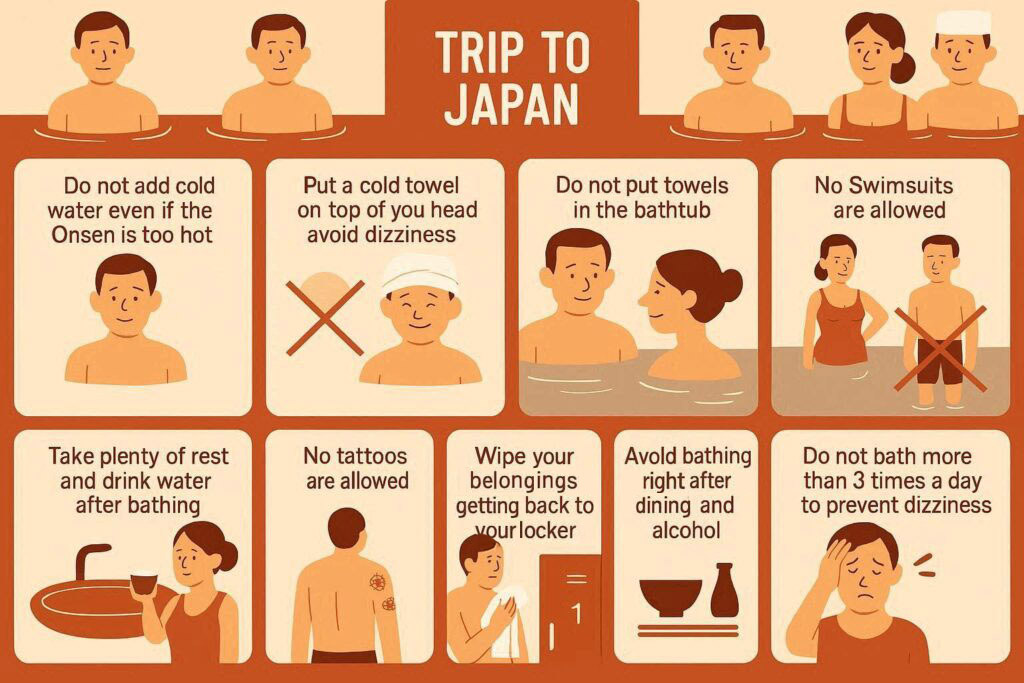
Onsens (natural hot springs) and sento (public baths) are popular throughout Japan. They provide a place to relax and cleanse your body. Strict rules are followed to keep the baths clean and enjoyable for everyone.
Bath Etiquette: Before Entering
- In most onsens, bathing nude is expected. This is normal and culturally respected in Japan.
- Use the shower area to wash your body thoroughly with soap and shampoo, and rinse completely.
- Make sure you are fully clean before stepping into the bath.
- If you have long hair, tie it up so it does not touch the water.
During Your Bath
- Keep your towel out of the water — place it on the side or rest it on your head.
- Sit and relax; avoid splashing, swimming, or moving around too much.
- Speak softly and maintain a quiet atmosphere.
- Respect others’ privacy and avoid staring at them.
Tattoos: Some baths do not allow people with tattoos, as they are historically associated with gangs in Japan. If you have a tattoo, check the rules before visiting. Some onsens offer private baths or allow tattoos if they are covered with a sticker.
Using Smartphones and Social Media Respectfully

In recent years, there has been growing concern about tourists filming or creating content in ways that disturb others. While capturing your experiences is natural, it’s important to be mindful of your surroundings:
- Do not block pathways, stairs, entrances, or streets while taking photos or filming.
- Avoid using loud music, sound effects, or voices when recording, especially in public spaces like trains, shrines, shops, or restaurants.
- Never photograph or film people without their permission, particularly in residential areas, small businesses, or private settings.
- Refrain from acting out or drawing attention to yourself in a way that makes others uncomfortable.
- Always follow local signs and rules regarding photography, as not every place allows content creation.
Japanese news outlets and local authorities have highlighted issues with “social media tourists” disrupting daily life. Being respectful when using your phone or social media helps maintain the harmony that makes Japan such a special place to visit.
How to Respect Personal Space and Privacy in Japan
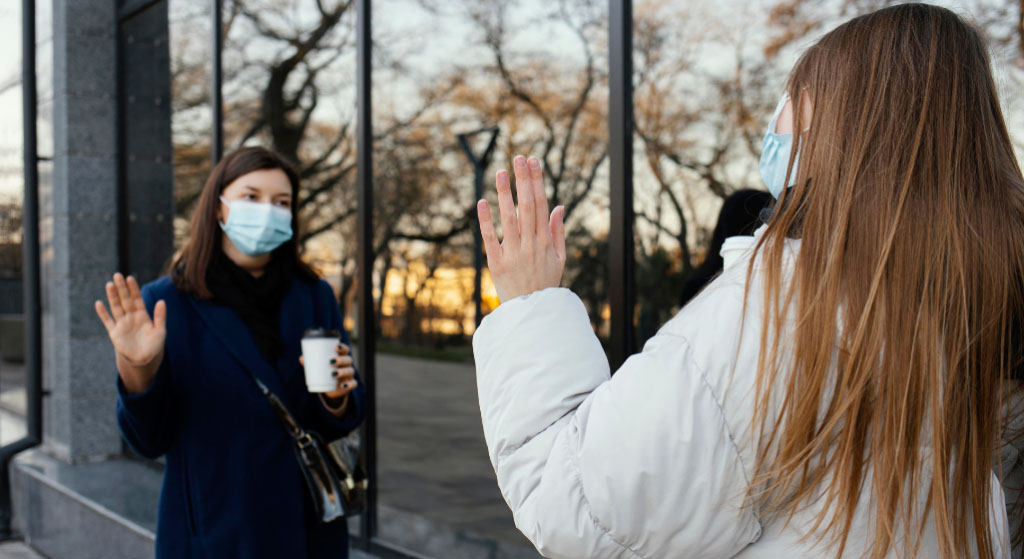
In Japan, people highly value personal space and quiet behavior, even in crowded areas like trains and stations. Keep these key points in mind:
- Avoid touching strangers — handshakes and hugs are not common.
- Maintain a small distance when standing in line or speaking with others.
- Do not stare at or point at people, as it is considered rude.
- Keep your voice low in public places.
- Avoid blocking walkways or forming groups that obstruct others.
These simple actions help everyone feel comfortable and respected in public spaces.
How to Behave in Hotels and Traditional Inns

Hotels in Japan are generally clean, quiet, and well-organized. Western-style hotels operate much like those in other countries: you check in at the front desk, receive your key, and go to your room. Payment is usually made at check-in or check-out. Hotel staff are polite and helpful, so don’t hesitate to ask if you need anything.
Ryokan: Traditional Japanese Inns
Ryokan offer a unique cultural experience, but the rules differ from regular hotels. Here’s what to expect:
- Shoes Off: Remove your shoes at the entrance. You’ll be provided with indoor slippers.
- Tatami Etiquette: Slippers are for walking inside, but remove them before stepping on tatami mats in your room.
- Room Setup: Rooms often feature tatami mats and a low table. You sit on the floor rather than on chairs.
- Sleeping: Sleep on a futon, a soft mattress laid directly on the tatami floor. Staff may set it up for you in the evening.
- Baths and Toilets: These may be shared with other guests. Follow posted rules carefully.
- Meals: Breakfast and dinner are often included and may be served in your room or a dining area.
- Behavior: Be polite, follow staff instructions, and enjoy the calm, quiet atmosphere.
Staying at a ryokan is a wonderful way to experience Japanese culture and hospitality firsthand.
How to Shop and Pay in Stores: A Complete Guide

Shopping in Japan is usually quiet and polite. Store staff are very helpful and respectful. Here are some tips to make your shopping experience smooth:
Carry Cash: Many stores, especially small shops and restaurants, prefer cash. Always have Japanese yen on hand.
Credit Cards: Large stores and hotels often accept credit cards, but not everywhere.
Use ATMs at Convenience Stores: ATMs in 7-Eleven, Lawson, or FamilyMart usually accept international cards.
Paying at the Cashier: Place your money in the small tray on the counter rather than handing it directly to the cashier, unless no tray is provided.
Receiving Change: Take your change from the tray, not directly from the cashier’s hand.
Prices Include Tax: The amount displayed is the total you pay.
Keep Your Receipt: Some stores may ask to see it when you exit.
Business Etiquette for Visitors

Business culture in Japan is formal and respectful. If you are visiting Japan for work, keep these tips in mind:
Bring Plenty of Business Cards (Meishi): You’ll exchange cards frequently, so keep them clean and ready.
Exchange Cards Properly: Give and receive cards with both hands, holding them so the other person can read them easily. Bow slightly when exchanging cards.
Handle Cards with Care: Do not write on or fold a business card. During meetings, place it on the table rather than putting it in your pocket immediately.
Arrive on Time: Punctuality is very important. Being late is considered disrespectful—aim to arrive early.
Dress Conservatively: Men typically wear a dark suit and tie; women should wear professional, conservative clothing.
Use Polite Language and Behavior: Speak softly and avoid jokes until the setting becomes informal.
Useful Japanese Words for Travelers
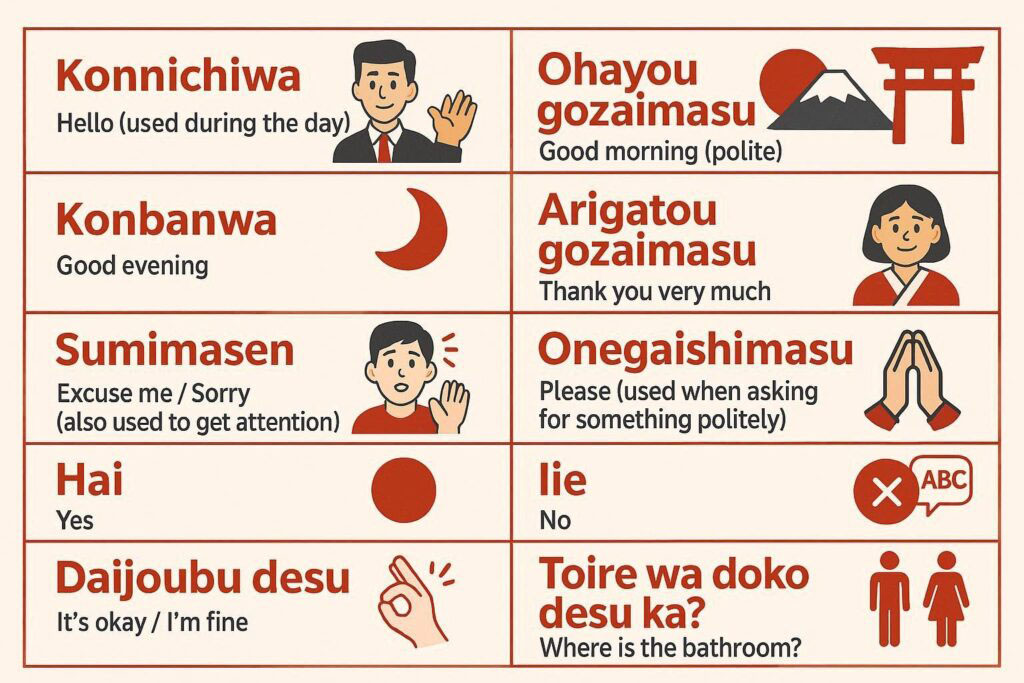
Knowing a few Japanese words can make your trip smoother. People will appreciate your effort, even if your pronunciation isn’t perfect. Here are some easy and useful Japanese phrases to get you started:
How to Enjoy Japan Respectfully: Final Tips
Japan is a country where manners and respect are highly valued. People appreciate quiet behavior, cleanliness, and politeness. Following these customs will make your trip smoother and more enjoyable.
Even if you don’t get everything perfect, locals will appreciate your effort. Simple actions—like removing your shoes indoors, speaking softly, or saying thank you in Japanese—can go a long way.
Observe what others are doing and follow their example. This will help you avoid mistakes and show that you respect Japanese culture.